Project Overview
Strategy & Advisory
AI Products & Platforms
Agents
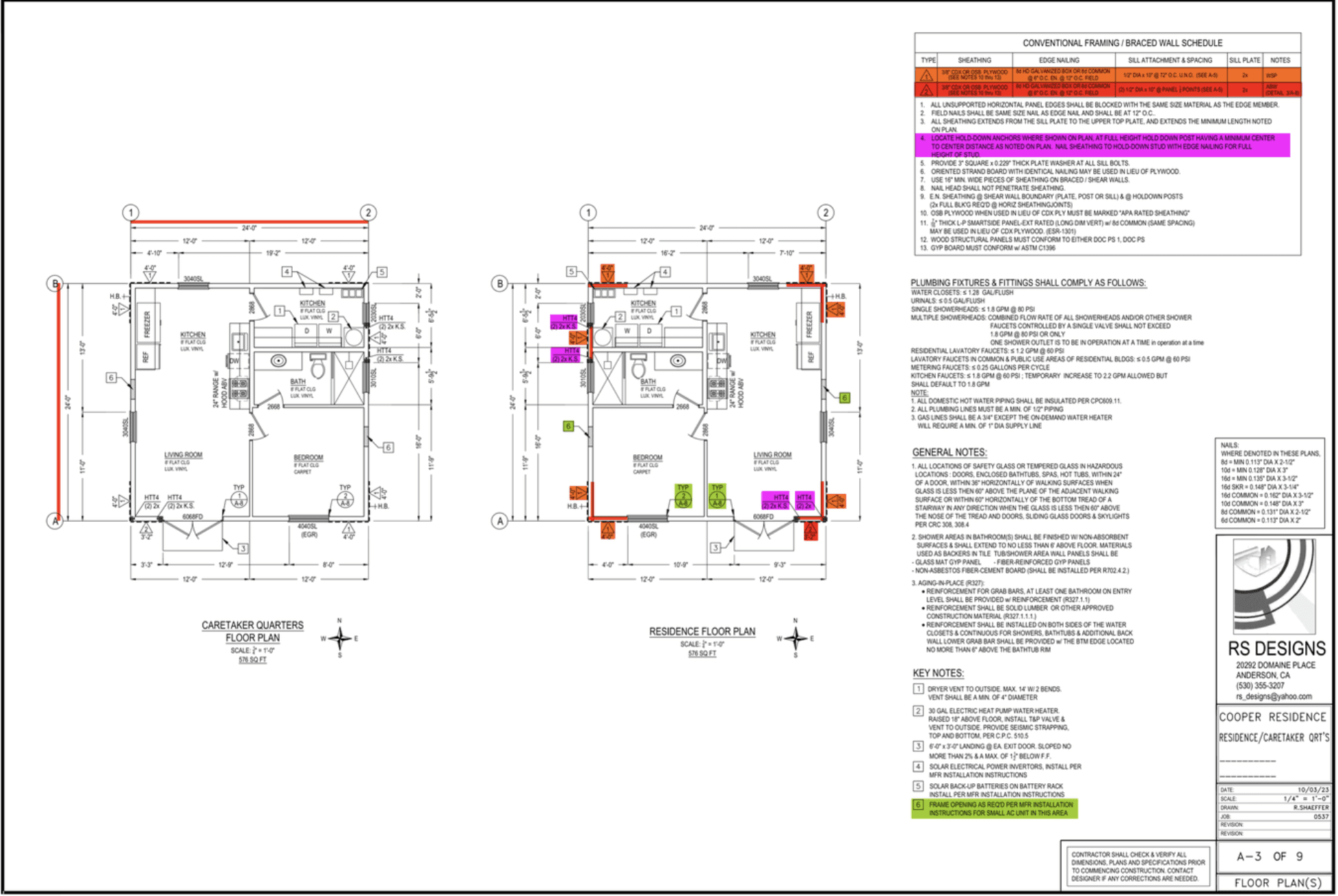
Rocket Takeoffs set out to modernize construction estimation by automating takeoffs and quality control from architectural drawings. The current workflow relied on manual review and interpretation across layers, symbols, and specifications—creating slow turnaround times, inconsistent accuracy, and high operational load.
SFAI Labs partnered with leadership to define an AI Product Strategy that balanced technical feasibility with commercial outcomes. Using our lab acceleration model, we structured a phased rollout from human-in-the-loop validation to model training and progressive automation, ensuring reliability before scale.
Within eight weeks, SFAI Labs designed the system architecture, workflow pipeline, and data strategy required to generate structured, machine-readable outputs from drawings. This included a JSON contract for components, confidence scoring, and a feedback loop to improve accuracy over time.
The result was a clear, execution-ready blueprint for an AI estimation platform that reduces manual effort, increases speed, and creates a scalable foundation for construction intelligence.
Key Takeaways
Human oversight enables reliable automation
Structured outputs unlock repeatable workflows
Phased rollout reduces model risk
Feedback loops compound accuracy
Strategy alignment accelerates scale
Challenge
Rocket Takeoffs needed accurate counts, quantities, and specification mappings from complex architectural drawings. Early tests showed that generic OCR and ad-hoc computer vision approaches failed on edge cases, produced inaccurate counts, and struggled with multi-layer files and inconsistent formats. The team also needed a path to automation that preserved trust through validation and correction.
Strategy
SFAI Labs defined a phased strategy: human-in-the-loop first, then model training, then automation. We condensed requirements into a five-step workflow: data structuring, core detection, QC learning engine, assembly intelligence with material suggestions, and grading/reporting—ensuring every step produced learning signals for continuous improvement.
Solution
We designed an AI estimation platform blueprint with: single-page ingestion, structured JSON outputs, confidence scoring, and a validation workflow that enables users to correct results and feed improvements back into the system. The approach also linked symbols to specifications and materials through structured tags, enabling scalable estimation across plans, layers, and material classes.
Execution
Week 1: Workflow design and requirements condensation
Week 2–3: Data structuring and schema contract definition
Week 4–5: Detection/QC pipeline design and evaluation approach
Week 6–7: Material/spec mapping strategy and grading/reporting design
Week 8: Roadmap, rollout plan, and implementation readiness
Results
Clear phased rollout to automation
Structured JSON estimation outputs
Reduced manual QC dependency
Business Value
The engagement created a practical path to automation that improves speed and reliability without sacrificing trust. Rocket Takeoffs gained a repeatable pipeline that supports faster estimation, lower operational effort, and a scalable product foundation for expansion into more plan types and material categories.
Why SFAI Labs
SFAI Labs combined product clarity with advanced AI systems thinking to design an enterprise-ready path from strategy to execution. Our lab model emphasized fast validation, human-in-the-loop reliability, and a scalable architecture that supports commercial growth.

Rocket Takeoffs
FAQ
What does SF AI Labs do?
SFAI Labs exists to help organizations turn bold ideas into real, scalable AI systems. We operate as an applied AI lab, combining rapid experimentation with disciplined execution to create technology that delivers lasting business and social value.
Who can work with SF AI Labs?
We partner with founders, operators, and enterprise leaders who want to use AI thoughtfully and responsibly to solve meaningful problems and build enduring organizations.
What kind of AI products does SF AI Labs build?
We design and build custom AI systems that augment human work, unlock hidden insights, and transform complex operations into intelligent, adaptive systems.
How long does it take to develop an AI prototype?
Our lab model allows most teams to move from idea to working prototype in four to eight weeks, creating early proof while laying the foundation for long-term impact.
Do I need a technical team to work with SF AI Labs?
No. We embed with your team as an extension of your organization, bringing research, engineering, and design together to turn ambition into working systems.